01 Goblet squat
Hold a manageable dumbbell or kettlebell close to the chest. Sit between the hips through a comfortable depth; keep breathing and stand smoothly.
Alternative: Unloaded chair squat with the same repetition target.
Asta’s lack of magic makes physical effort central to how he meets the world. His determination gives strength training a story about agency.
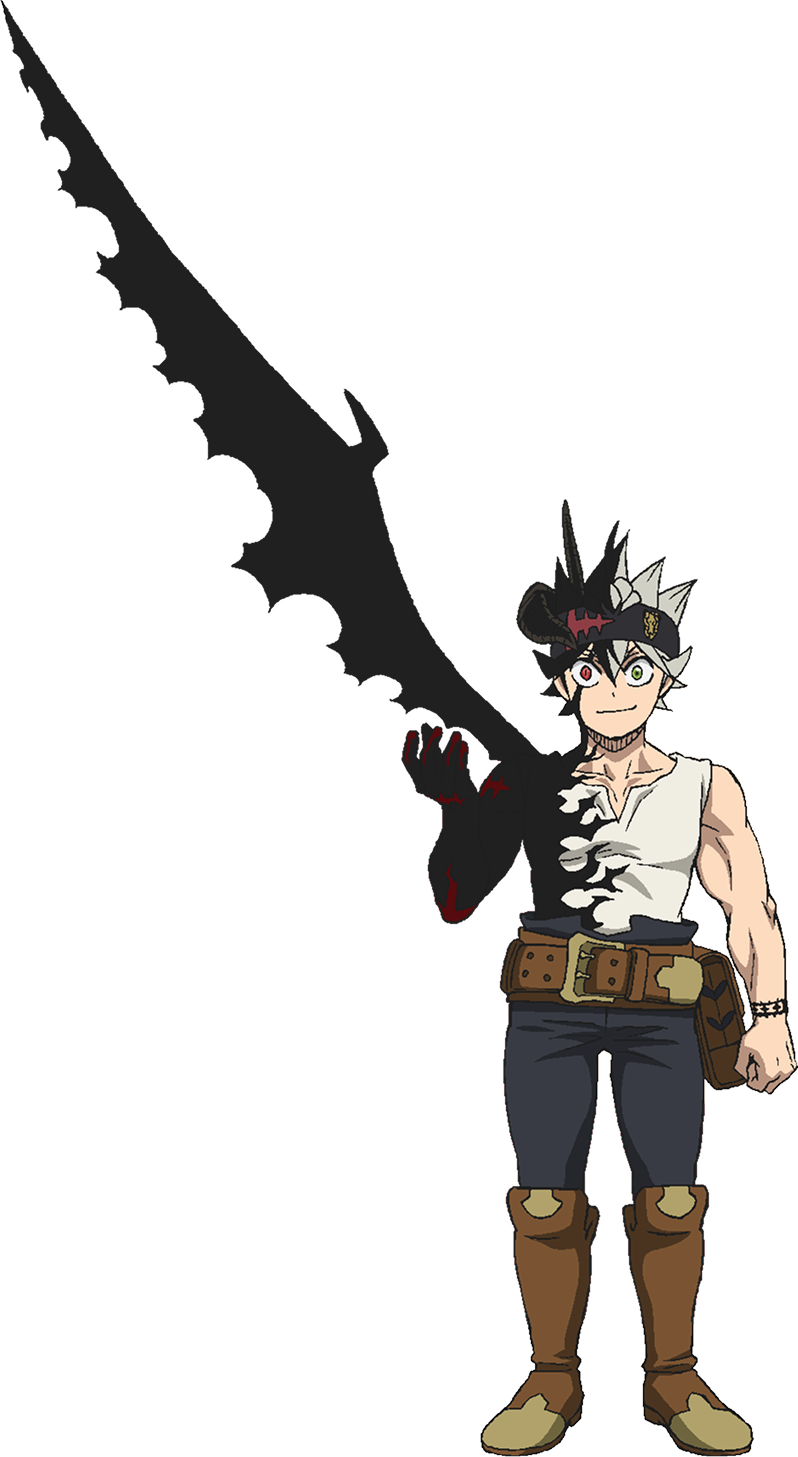
THE CHARACTER BEHIND THE MOTIVATION
In a world shaped by magic, Asta begins without it. His determination and the contrasting personalities of the Black Bulls make a training theme about developing your own strengths and learning alongside others.
Measure a training habit you control rather than comparing starting points.
Use this as a starting point for choosing your own goal. Character artwork and supernatural abilities cannot predict your physique or rate of progress.
Character and story reference: Black Clover Official — Introduction ↗Your direction / Strength
Build general muscle and strength with a pulling and carrying emphasis.
TV Tokyo’s official Black Clover profile describes Asta relying on trained physical strength alongside anti-magic swords. The draft uses ordinary gym loads, not oversized swords or magic claims.
Back, legs, and arm support within repeatable full-body training
Draft for coach review. This is a complete editorial draft with proposed exercises and progression. Fitness coach review is pending. Review the starting-dose notes before using the tables.
Choose a plank height or knee-supported variation that allows normal breathing without sagging.
TV Tokyo’s official Black Clover profile describes Asta relying on trained physical strength alongside anti-magic swords. The draft uses ordinary gym loads, not oversized swords or magic claims.
Build general muscle and strength with a pulling and carrying emphasis.
The useful theme is practising what can be trained. Supported pulling and moderate presses build an upper-body base, while squats and hinges remain the larger load-bearing movements. Arm accessories follow the basics rather than replacing them.
Three weekly sessions allow regular practice without daily failure work. The trainee still needs recovery, and a two-day start is appropriate if new to resistance training. Fictional determination is not evidence that every person should tolerate the same volume.
For adults only as a general editorial draft. Review existing symptoms, relevant conditions, experience and total sport workload with a qualified coach before choosing a block.
Choose a plank height or knee-supported variation that allows normal breathing without sagging.
Week 1: use one work set per resistance movement and the lowest interval or skill dose shown. Later set counts are proposed targets only after manageable recovery. Keep two or three controlled repetitions available and never test a maximum.
Use the listed alternative if a movement or impact task is unsuitable. If neither version is appropriate, have your coach replace it. Do not imitate supernatural loads, forced stretching, waterfall exposure, head impacts or loose-rock lifting.
Follow the order, work intervals, and rest shown in your chosen session. Warm-up practice is separate from the proposed work dose. Keep movement controlled and stop a set or interval earlier if technique changes.
| Day | Session |
|---|---|
| Monday | Odd weeks: A · Earn the basics; even weeks: B · Carry the effort |
| Tuesday | Rest or comfortable easy activity |
| Wednesday | Odd weeks: B · Carry the effort; even weeks: A · Earn the basics |
| Thursday | Rest or comfortable easy activity |
| Friday | Odd weeks: A · Earn the basics; even weeks: B · Carry the effort |
| Saturday | Rest; do not make up missed sessions |
| Sunday | Review the log and prepare the next week |
Squat, press, and row with controlled arm work; 35 minutes.
Walk or cycle easily for 4–5 minutes. Practice chair squats and light rows. Rehearse the first loaded leg movement and first upper-body movement with one easy practice set; warm-up sets do not count as work sets.
| Exercise | Sets / rounds | Reps / duration | Rest |
|---|---|---|---|
| Goblet squat | 2 | 8–10 | 90 seconds |
| Dumbbell floor press | 2 | 8–12 | 90 seconds |
| Supported dumbbell row | 2 | 8–12 each side | 90 seconds |
| Dumbbell hammer curl | 2 | 10–12 | 60 seconds |
| Elevated forearm plank | 2 | 10–20 seconds | 60 seconds |
Hold a manageable dumbbell or kettlebell close to the chest. Sit between the hips through a comfortable depth; keep breathing and stand smoothly.
Alternative: Unloaded chair squat with the same repetition target.
Use light weights and a setup your coach has checked. Lie on a mat, lower upper arms gently to the floor and press without bouncing or holding your breath.
Alternative: Incline push-up at an appropriate height.
Brace one hand on an immovable bench. Keep the trunk still and pull a light dumbbell toward the hip without twisting. Lower slowly.
Alternative: Seated row machine adjusted by an instructor.
Keep elbows near the ribs and wrists straight; curl without swinging and lower slowly. Use a light pair that leaves two or three repetitions available.
Alternative: Light band curl with a manufacturer-approved setup, or omit if gripping provokes symptoms.
Use an immovable elevated support at a manageable angle. Keep the trunk still, breathe and stop before sagging.
Alternative: Standing wall plank at an easier angle.
Hinge, vertical pull, and simple load handling; 35 minutes.
Walk or cycle easily for 4–5 minutes. Rehearse hinges and a light carry set-down. Rehearse the first loaded leg movement and first upper-body movement with one easy practice set; warm-up sets do not count as work sets.
| Exercise | Sets / rounds | Reps / duration | Rest |
|---|---|---|---|
| Dumbbell Romanian deadlift | 2 | 8–10 | 90–120 seconds |
| Lat pulldown | 2 | 8–12 | 90 seconds |
| Supported split squat | 2 | 6–8 each side | 90 seconds after both sides |
| Incline push-up | 2 | 6–12 | 90 seconds |
| Light farmer carry | 2 | 20–25 seconds | 90 seconds |
Hold light dumbbells near the thighs. Soften knees, move hips back and stop before trunk position changes. Keep weights close and stand without leaning back.
Alternative: Unloaded hinge to a wall.
Have machine seat and thigh support adjusted. Draw the bar toward the upper chest with a comfortable grip; avoid pulling behind the neck or swinging.
Alternative: Coach-supervised foot-assisted pull-up.
Hold an immovable support, take a split stance and lower vertically through a comfortable range. Keep the front foot grounded; use bodyweight before load.
Alternative: Chair squat, 8 repetitions.
Use an immovable counter or securely fixed gym bar. Lower the chest toward it while keeping the trunk controlled; choose a higher surface if necessary.
Alternative: Wall push-up at the same dose.
Use manageable paired weights and a clear flat route. Walk slowly with relaxed shoulders and set down before grip or posture deteriorates.
Alternative: Short unloaded walk with upright posture.
Use one work set per strength exercise and the lower repetition bound, leaving about three controlled repetitions available. Use the shortest timed dose. Record variations and loads; do not test a maximum.
Use the stated two sets if movement and next-day recovery are comfortable; otherwise repeat the first-week dose. Keep two or three repetitions in reserve and do not add extra sessions.
Add one repetition within the stated range. After two exposures at the upper bound with two repetitions left, use the smallest load increase, ideally around 2–5%, and return to the lower bound. If the jump is too large, retain the previous weight. Front planks and carries cap at 25 seconds; normal breathing and posture take priority over time. No extra daily push-up or sword quotas.
Repeat the last manageable week without a maximum test. Reduce to one strength set if fatigue persists. Compare controlled performance and attendance, then repeat or seek a reviewed next block.
These sources inform general training, activity, equipment, and pacing principles. They do not validate this exact exercise selection, dose, or progression, and do not endorse Hypekage.
BEFORE YOU START
TV Tokyo’s official Black Clover profile describes Asta relying on trained physical strength alongside anti-magic swords. The draft uses ordinary gym loads, not oversized swords or magic claims. The sessions and progression are Hypekage’s proposed adult practice block, not a canon prescription.
Build general muscle and strength with a pulling and carrying emphasis. The exact appearance of a stylized character is not a predictable training outcome.
Check the full equipment list, the starting-dose notes and 3-day weekly schedule with your coach. The 6-week draft includes progression and alternatives but has not yet been coach-approved.
Official scene clip
Published by Crunchyroll Dubs. May include scenes beyond this page’s focus.
KEEP EXPLORING