01 Supported reverse lunge
Use a fixed support and step one foot back into a short comfortable split stance. Return using the front leg without a fast push-off.
Alternative: Static supported split squat, 6 each side.
Izumi asks her students to understand foundations rather than rely on cleverness alone. Hypekage draws on the principle of learning, not the hazards of her fictional methods.
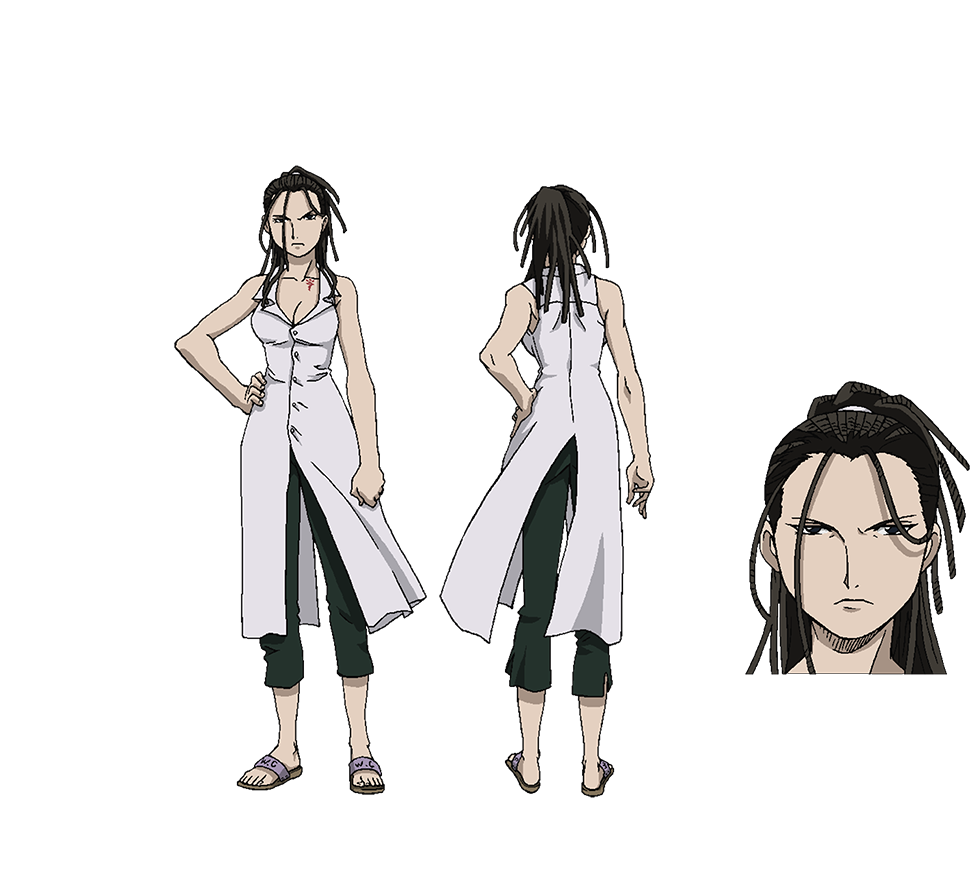
THE CHARACTER BEHIND THE MOTIVATION
Edward and Alphonse remember the harsh island lesson their teacher Izumi set before their formal alchemy training. Their challenge is to understand their place within a much larger whole.
Identify a basic skill that deserves a patient refresher.
Use this as a starting point for choosing your own goal. Character artwork and supernatural abilities cannot predict your physique or rate of progress.
Character and story reference: Crunchyroll — One Is All, All Is One ↗Your direction / Athleticism
Develop practical legs, pulling strength, and stable trunk control.
Official Brotherhood material identifies Izumi as the Elrics’ demanding teacher. This adult routine takes the theme of fundamentals while excluding survival deprivation and training through illness.
Low-equipment strength and measured conditioning
Draft for coach review. This is a complete editorial draft with proposed exercises and progression. Fitness coach review is pending. Review the starting-dose notes before using the tables.
Choose supported leg alternatives if balance is limited. Do not begin with an illness or symptom that needs assessment.
Official Brotherhood material identifies Izumi as the Elrics’ demanding teacher. This adult routine takes the theme of fundamentals while excluding survival deprivation and training through illness.
Develop practical legs, pulling strength, and stable trunk control.
A strong teacher’s presence can inspire careful basics rather than brutal imitation. Supported lunges and rows are paired with accessible pressing, while marching adds a small repeatable conditioning dose without turning strength work into an endurance test.
A second day emphasizes stepping and a light carry. There is no wilderness trial, food restriction, or medical claim attached to the program. Anyone whose circumstances resemble illness in the story needs individual advice, not a harder generic workout.
For adults only as a general editorial draft. Review existing symptoms, relevant conditions, experience and total sport workload with a qualified coach before choosing a block.
Choose supported leg alternatives if balance is limited. Do not begin with an illness or symptom that needs assessment.
Week 1: use one work set per resistance movement and the lowest interval or skill dose shown. Later set counts are proposed targets only after manageable recovery. Keep two or three controlled repetitions available and never test a maximum.
Use the listed alternative if a movement or impact task is unsuitable. If neither version is appropriate, have your coach replace it. Do not imitate supernatural loads, forced stretching, waterfall exposure, head impacts or loose-rock lifting.
Follow the order, work intervals, and rest shown in your chosen session. Warm-up practice is separate from the proposed work dose. Keep movement controlled and stop a set or interval earlier if technique changes.
| Day | Session |
|---|---|
| Monday | A · Basics with intent |
| Tuesday | No additional session from this block |
| Wednesday | Rest or ordinary easy activity |
| Thursday | B · Practical capacity |
| Friday | No additional session from this block |
| Saturday | Rest or existing coached practice, without adding another full plan |
| Sunday | Review the log and prepare the next week |
Strength then controlled marching; 25–35 minutes.
Walk or cycle easily for 4–5 minutes. Rehearse a short supported reverse step. Rehearse the first loaded leg movement and first upper-body movement with one easy practice set; warm-up sets do not count as work sets.
| Exercise | Sets / rounds | Reps / duration | Rest |
|---|---|---|---|
| Supported reverse lunge | 2 | 5–8 each side | 90 seconds |
| Incline push-up | 2 | 6–10 | 90 seconds |
| Supported dumbbell row | 2 | 8–12 each side | 90 seconds |
| Bird dog | 2 | 5 each side | 60 seconds |
| Supported marching | 4 | 30 seconds | 45 seconds |
Use a fixed support and step one foot back into a short comfortable split stance. Return using the front leg without a fast push-off.
Alternative: Static supported split squat, 6 each side.
Use an immovable counter or securely fixed gym bar. Lower the chest toward it while keeping the trunk controlled; choose a higher surface if necessary.
Alternative: Wall push-up at the same dose.
Brace one hand on an immovable bench. Keep the trunk still and pull a light dumbbell toward the hip without twisting. Lower slowly.
Alternative: Seated row machine adjusted by an instructor.
From hands and knees, reach one limb or opposite arm and leg without twisting. Use a short comfortable reach and return slowly.
Alternative: Standing alternating arm reach at a wall.
Stand beside a fixed support. Alternate comfortable knee lifts without leaning, holding your breath or rushing. Use a pace allowing sentences; no all-out efforts.
Alternative: Seated alternating foot lifts.
Stepping, hip support, and light load handling; 25–35 minutes.
Walk or cycle easily for 4–5 minutes. Use five low step-ups with support. Rehearse the first loaded leg movement and first upper-body movement with one easy practice set; warm-up sets do not count as work sets.
| Exercise | Sets / rounds | Reps / duration | Rest |
|---|---|---|---|
| Low step-up | 2 | 6–8 each side | 90 seconds |
| Anchored band row | 2 | 10–12 | 75 seconds |
| Dumbbell floor press | 2 | 8–10 | 90 seconds |
| Glute bridge | 2 | 10–12 | 60 seconds |
| Light suitcase carry | 2 | 15–20 seconds each side | 75 seconds |
Use a purpose-built stable low step and a rail if needed. Place the whole foot on it; step up and return slowly. Do not stack loose objects.
Alternative: Chair sit-to-stand, 8–10 repetitions.
Use a manufacturer-approved anchor checked for this direction of pull. Keep the trunk quiet, draw elbows back and return with control.
Alternative: A suitably adjusted seated cable row.
Use light weights and a setup your coach has checked. Lie on a mat, lower upper arms gently to the floor and press without bouncing or holding your breath.
Alternative: Incline push-up at an appropriate height.
Lie on a mat, knees bent, feet flat. Lift hips without arching the lower back. Lower slowly and keep breathing.
Alternative: Standing hip extension with stable support.
Carry one manageable weight at your side on a clear route. Stay upright without leaning and change hands after a controlled set-down.
Alternative: Stationary supported march without load.
Use one work set per strength exercise and the lower repetition bound, leaving about three controlled repetitions available. Use the shortest timed dose. Record variations and loads; do not test a maximum. Start marching with two rounds.
Use the stated two sets if movement and next-day recovery are comfortable; otherwise repeat the first-week dose. Keep two or three repetitions in reserve and do not add extra sessions.
Add one repetition within ranges; keep loads manageable. Marching can increase from four to five rounds after two comfortable sessions, with pace unchanged. Carries stop at 20 seconds.
Repeat the last manageable week without a maximum test. Reduce to one strength set if fatigue persists. Compare controlled performance and attendance, then repeat or seek a reviewed next block.
These sources inform general training, activity, equipment, and pacing principles. They do not validate this exact exercise selection, dose, or progression, and do not endorse Hypekage.
BEFORE YOU START
Official Brotherhood material identifies Izumi as the Elrics’ demanding teacher. This adult routine takes the theme of fundamentals while excluding survival deprivation and training through illness. The sessions and progression are Hypekage’s proposed adult practice block, not a canon prescription.
Develop practical legs, pulling strength, and stable trunk control. The exact appearance of a stylized character is not a predictable training outcome.
Check the full equipment list, the starting-dose notes and 2-day weekly schedule with your coach. The 4-week draft includes progression and alternatives but has not yet been coach-approved.
Official trailer
Published by アニプレックス チャンネル. May include scenes beyond this page’s focus.
KEEP EXPLORING