01 Low-speed lateral shuffle
Use a short clear court lane and supportive footwear. Make two or three small side steps each way at a controlled pace; this is not a maximal agility test.
Alternative: Lateral walking with the same timing.
Killua’s experience and quick thinking contrast with Gon’s approach. Their shared learning makes skill development feel like a conversation rather than a race.
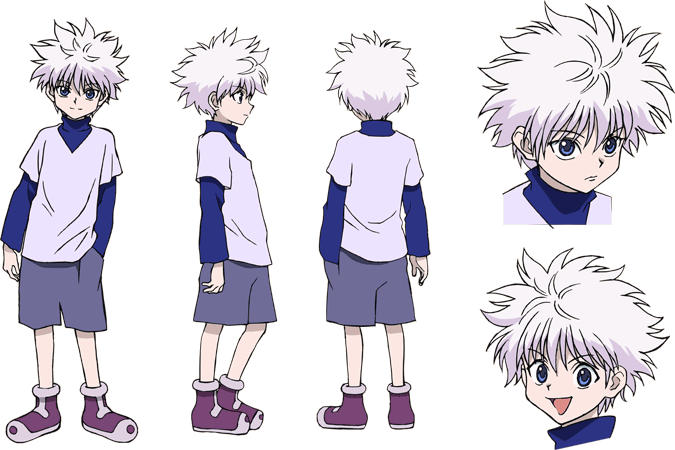
THE CHARACTER BEHIND THE MOTIVATION
At Heavens Arena, Gon and Killua discover a new dimension of combat. Wing introduces them to Nen, showing that raw talent is only the beginning of understanding their abilities.
Ask for feedback on one skill instead of judging progress only by effort.
Use this as a starting point for choosing your own goal. Character artwork and supernatural abilities cannot predict your physique or rate of progress.
Character and story reference: VIZ — Heavens Arena Arc ↗Your direction / Athleticism
Use the character’s agile appeal to choose a movement skill rather than a fictional speed goal.
Killua’s extraordinary abilities and assassin background are fiction. The transferable editorial theme is moving deliberately and being able to stop under control.
Practice deliberate foot placement and controlled changes of direction at low speed.
Draft for coach review. This is a complete editorial draft with proposed exercises and progression. Fitness coach review is pending. Review the starting-dose notes before using the tables.
For adults who can practice the listed movements at a manageable starting level. Practice deliberate foot placement and controlled changes of direction at low speed. Have a coach check the setup and any existing sport workload. Jumping, hanging and sport-specific stance tasks are optional only after appropriate readiness and technique have been checked.
Killua’s extraordinary abilities and assassin background are fiction. The transferable editorial theme is moving deliberately and being able to stop under control.
Use the character’s agile appeal to choose a movement skill rather than a fictional speed goal.
Lateral shuffling is short and slow, with a complete reset between attempts. Supported strength gives the practice a physical foundation.
The second session changes the direction of the step without introducing maximal sprinting or cutting. Balance is the success criterion.
For adults only as a general editorial draft. Review existing symptoms, relevant conditions, experience and total sport workload with a qualified coach before choosing a block.
For adults who can practice the listed movements at a manageable starting level. Practice deliberate foot placement and controlled changes of direction at low speed. Have a coach check the setup and any existing sport workload. Jumping, hanging and sport-specific stance tasks are optional only after appropriate readiness and technique have been checked.
Week 1: use one work set per resistance movement and the lowest interval or skill dose shown. Later set counts are proposed targets only after manageable recovery. Keep two or three controlled repetitions available and never test a maximum.
Use the listed alternative if a movement or impact task is unsuitable. If neither version is appropriate, have your coach replace it. Do not imitate supernatural loads, forced stretching, waterfall exposure, head impacts or loose-rock lifting.
Follow the order, work intervals, and rest shown in your chosen session. Warm-up practice is separate from the proposed work dose. Keep movement controlled and stop a set or interval earlier if technique changes.
| Day | Session |
|---|---|
| Monday | A · Lateral control and preparation |
| Tuesday | No additional session from this block |
| Wednesday | Rest or ordinary easy activity |
| Thursday | B · Support and consolidation |
| Friday | No additional session from this block |
| Saturday | Rest or existing coached practice, without adding another full plan |
| Sunday | Review the log and prepare the next week |
Lateral shuffling is short and slow, with a complete reset between attempts. Supported strength gives the practice a physical foundation.
Walk comfortably for 4 minutes, then rehearse five unloaded squats and five comfortable ankle or hip movements. Review the setup for lateral control; use a light practice set before loaded work. Optional impact or technical footwork requires prior coach assessment.
| Exercise | Sets / rounds | Reps / duration | Rest |
|---|---|---|---|
| Low-speed lateral shuffle | 3 | 10 seconds | 60 seconds |
| Supported split squat | 2 | 6–8 each side | 90 seconds after both sides |
| Supported calf raise | 2 | 8–12 | 60 seconds |
| Elevated forearm plank | 2 | 15–25 seconds | 60 seconds |
| Comfortable purposeful walk | 1 | 5–8 minutes | 60 seconds easy movement |
Use a short clear court lane and supportive footwear. Make two or three small side steps each way at a controlled pace; this is not a maximal agility test.
Alternative: Lateral walking with the same timing.
Hold an immovable support, take a split stance and lower vertically through a comfortable range. Keep the front foot grounded; use bodyweight before load.
Alternative: Chair squat, 8 repetitions.
Hold a fixed support. Rise slowly onto the forefoot and lower heels to the floor without bouncing; start with both legs.
Alternative: Seated heel raise with feet on the floor.
Use an immovable elevated support at a manageable angle. Keep the trunk still, breathe and stop before sagging.
Alternative: Standing wall plank at an easier angle.
Use a clear route. Choose a pace that lets you talk comfortably and finish before fatigue changes your gait. Keep a conversational pace. The aerobic task is not a race.
Alternative: Easy stationary cycling or supported marching.
The second session changes the direction of the step without introducing maximal sprinting or cutting. Balance is the success criterion.
Use 4 minutes of easy walking or marching. Rehearse support without challenging load or speed, then check the space, support and planned rest. Keep this a preparation period rather than another work interval.
| Exercise | Sets / rounds | Reps / duration | Rest |
|---|---|---|---|
| Lateral step and balance | 2 | 5 each side | 60 seconds |
| Low step-up | 2 | 6–8 each side | 90 seconds |
| Incline push-up | 2 | 6–10 | 90 seconds |
| Supported single-leg balance | 2 | 10–20 seconds each side | 45 seconds |
| Supported ankle rock | 2 | 6–8 each side | 30 seconds |
Step sideways and pause with control before returning. Keep the distance short and feet close to the floor; this is not a bounding drill.
Alternative: Supported side-to-side weight shift.
Use a purpose-built stable low step and a rail if needed. Place the whole foot on it; step up and return slowly. Do not stack loose objects.
Alternative: Chair sit-to-stand, 8–10 repetitions.
Use an immovable counter or securely fixed gym bar. Lower the chest toward it while keeping the trunk controlled; choose a higher surface if necessary.
Alternative: Wall push-up at the same dose.
Stay beside a fixed support and lift one foot only slightly. Use fingertip support as needed and return it to the floor before balance is lost.
Alternative: Split-stance balance with both feet grounded.
With both feet supported, move the knee gently toward the toes while the heel stays grounded. Use comfortable range; do not force an end position.
Alternative: Seated ankle pumps.
Use one set of each resistance task and the lowest skill or interval dose shown. For Killua · Foot Placement and Reset, begin by checking setup and this measure: Record balanced finishes out of the planned attempts.
If ordinary movement and recovery remain comfortable, use the stated sets; keep load, range and speed at the first week’s manageable level. Add one quality attempt at the same low speed. Keep the lane length unchanged until every attempt finishes in balance.
Add one quality attempt at the same low speed. Keep the lane length unchanged until every attempt finishes in balance. Repeat a week whenever technique or recovery becomes less consistent. Record balanced finishes out of the planned attempts.
Repeat the best-controlled recent dose instead of testing a maximum. Avoid adding these footwork tasks to an already demanding court or field session without coach review. Review the log and this block’s focus with your coach before another progression.
These sources inform general training, activity, equipment, and pacing principles. They do not validate this exact exercise selection, dose, or progression, and do not endorse Hypekage.
BEFORE YOU START
Killua’s extraordinary abilities and assassin background are fiction. The transferable editorial theme is moving deliberately and being able to stop under control. The sessions and progression are Hypekage’s proposed adult practice block, not a canon prescription.
Use the character’s agile appeal to choose a movement skill rather than a fictional speed goal. The exact appearance of a stylized character is not a predictable training outcome.
Check the full equipment list, the starting-dose notes and 2-day weekly schedule with your coach. The 4-week draft includes progression and alternatives but has not yet been coach-approved.
Official trailer
Published by VIZ Media. May include scenes beyond this page’s focus.
KEEP EXPLORING