01 Freeze-frame scan
Pause four lawful football clips before a pass. Mark the ball, nearest defender and two teammates. Success: record visible positions before naming an option.
Alternative: Draw a three-attacker, two-defender diagram.
Isagi’s football development centers on understanding what he can contribute in a competitive environment.
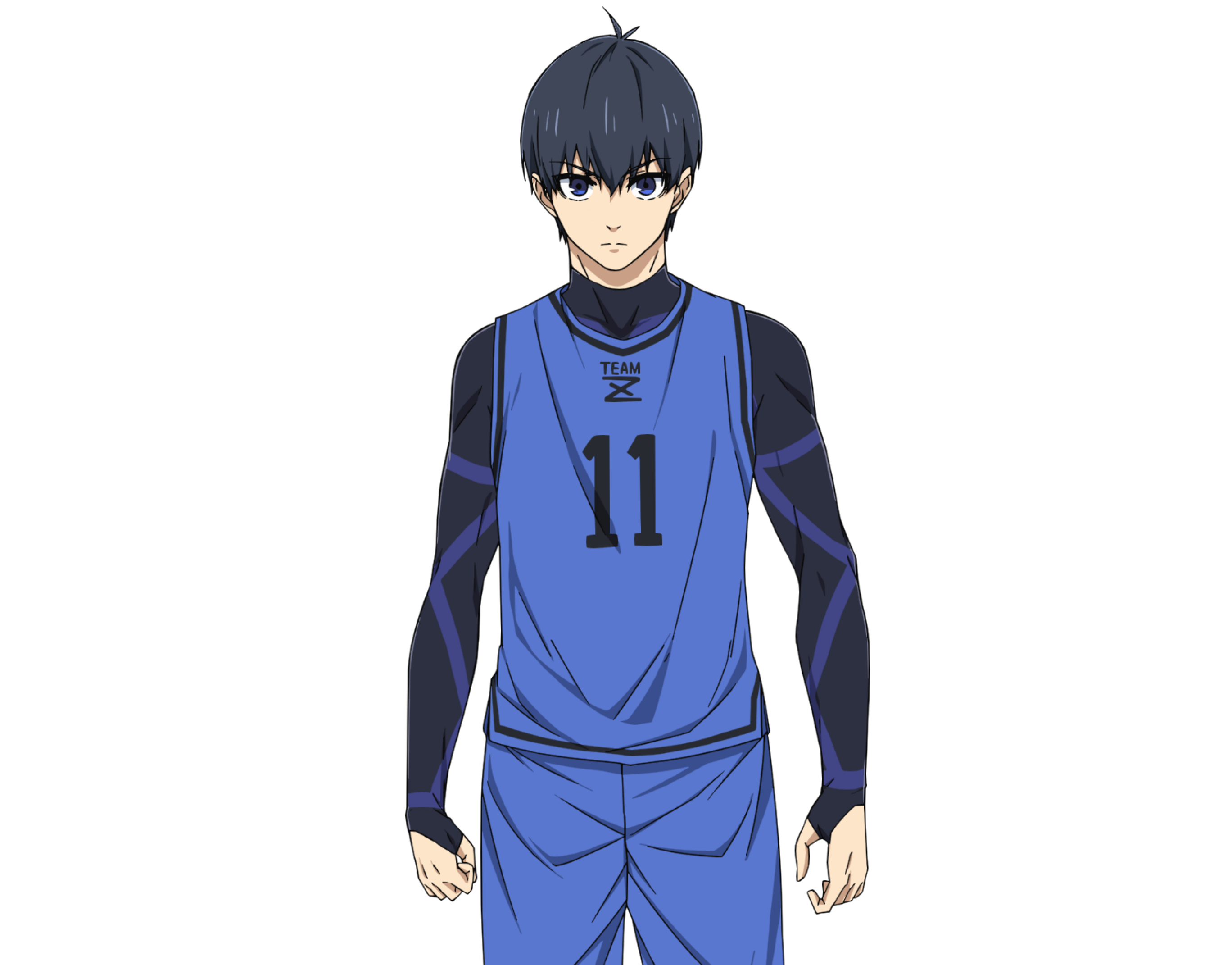
THE CHARACTER BEHIND THE MOTIVATION
Blue Lock places young footballers in a competitive development project. Isagi, Bachira, and Chigiri bring contrasting qualities to the game, offering a lens for identifying the skills you want to develop.
Name one sport skill and a useful way to get feedback on it.
Use this as a starting point for choosing your own goal. Character artwork and supernatural abilities cannot predict your physique or rate of progress.
Character and story reference: Blue Lock Official — Characters ↗Your direction / Sport IQ
Practice observation and explicit reasoning; this draft has no physique target or claim of general IQ improvement.
Isagi is a forward whose story emphasizes choices. This draft practices describing football situations, not acquiring supernatural vision.
Football space recognition
Draft for coach review. This is a complete editorial draft with proposed exercises and progression. Fitness coach review is pending. Review the starting-dose notes before using the tables.
Choose a familiar rule set and examples with enough visible context. A plausible decision may differ from the event that actually happened; a coach must distinguish sound reasoning from hindsight. No private surveillance, deception practice or diagnosis of other people.
Isagi is a forward whose story emphasizes choices. This draft practices describing football situations, not acquiring supernatural vision.
Practice observation and explicit reasoning; this draft has no physique target or claim of general IQ improvement.
Identify available space before predicting the ball carrier’s action.
Separate a defensible choice from an outcome judged with hindsight.
These are educational decision-making or reasoning practices, not a treatment, intelligence test or promise of increased general IQ. Transfer to sport must be checked through actual coached practice.
Choose a familiar rule set and examples with enough visible context. A plausible decision may differ from the event that actually happened; a coach must distinguish sound reasoning from hindsight. No private surveillance, deception practice or diagnosis of other people.
Use your own or lawfully accessible footage, diagrams or original scenarios. Pause and reason before checking; record uncertainty rather than inventing a correct answer.
Follow the task order and reflection steps. Record your prediction before checking the outcome, then review the decision with a relevant coach or educator. These practices do not establish a change in general IQ.
| Day | Session |
|---|---|
| Monday | Isagi · Scan, Choose, Review — observe and explain |
| Tuesday | No additional session from this block |
| Wednesday | Rest or ordinary easy activity |
| Thursday | Isagi · Scan, Choose, Review — challenge and revise |
| Friday | No additional session from this block |
| Saturday | Rest or existing coached practice, without adding another full plan |
| Sunday | Review the log and prepare the next week |
Identify available space before predicting the ball carrier’s action.
Spend two minutes arranging the page, reviewing the relevant rules and choosing the examples. Write today’s single question. Adjust screen distance and seating; a paper diagram is an equally valid format.
| Task | Sets / rounds | Attempts / duration | Rest |
|---|---|---|---|
| Freeze-frame scan | 1 | 4 minutes | 60 seconds to stand, look away and reset |
| Two-option comparison | 1 | 4 minutes | 60 seconds to stand, look away and reset |
| Prediction before reveal | 1 | 3 minutes | 60 seconds to stand, look away and reset |
Pause four lawful football clips before a pass. Mark the ball, nearest defender and two teammates. Success: record visible positions before naming an option.
Alternative: Draw a three-attacker, two-defender diagram.
Choose pass, carry or shot in two situations, then give a reason for the strongest alternative. Success: both choices refer to space or pressure.
Alternative: Have a coach prepare written situations with positions.
Write the expected next action and confidence as low, medium or high before playback. Success: all entries are dated before the reveal.
Alternative: Use a partner-controlled sequence of paper diagrams.
Separate a defensible choice from an outcome judged with hindsight.
Spend two minutes arranging the page, reviewing the relevant rules and choosing the examples. Write today’s single question. Adjust screen distance and seating; a paper diagram is an equally valid format.
| Task | Sets / rounds | Attempts / duration | Rest |
|---|---|---|---|
| Move the defender | 1 | 4 minutes | 60 seconds to stand, look away and reset |
| Outcome versus choice | 1 | 4 minutes | 60 seconds to stand, look away and reset |
| One cue in practice | 1 | 3 minutes | 60 seconds to stand, look away and reset |
Shift one defender in each of three diagrams. Explain whether the original option remains viable. Success: one changed cue is linked to each revision.
Alternative: Use coins as markers.
Review three prior choices. Record whether the option was reasonable and separately whether it succeeded. Success: a failed action is not automatically called a bad decision.
Alternative: Discuss two examples with a coach.
Choose one observation to discuss at ordinary coached football practice; write when to notice it and how to review it. Success: one concrete observation, not a match-winning promise.
Alternative: Make a short question for the next team session.
Use familiar examples at your own pace. Record each decision and the evidence before revealing the next event. Collect a baseline of explanations and disagreements; no time pressure or intelligence score.
Use different examples of the same situation. Have a coach or partner examine the cues and the available alternatives. Correct one recurring misunderstanding. Keep the same session time rather than adding more clips.
Change one constraint: score, position, missing information or rule. State what is unknown and one plausible alternative. Keep the pause long enough to explain the choice; reduce complexity if the rule understanding breaks down.
Complete the same tasks with unseen examples. Compare explanations and confidence with week 1, then discuss one cue to explore in ordinary coached practice. A better worksheet score is not proof of better game performance or increased IQ.
These sources inform general training, activity, equipment, and pacing principles. They do not validate this exact exercise selection, dose, or progression, and do not endorse Hypekage.
BEFORE YOU START
Isagi is a forward whose story emphasizes choices. This draft practices describing football situations, not acquiring supernatural vision. The sessions and progression are Hypekage’s proposed adult practice block, not a canon prescription.
These tasks practice a specific decision or reasoning process. They do not establish an improvement in general IQ; transfer needs to be checked through relevant real practice and feedback.
Check the full equipment list, the starting-dose notes and 2-day weekly schedule with your coach. The 4-week draft includes progression and alternatives but has not yet been coach-approved.
Official scene clip
Published by Crunchyroll. May include scenes beyond this page’s focus.
KEEP EXPLORING